ISF: The International Streetlifting Federation
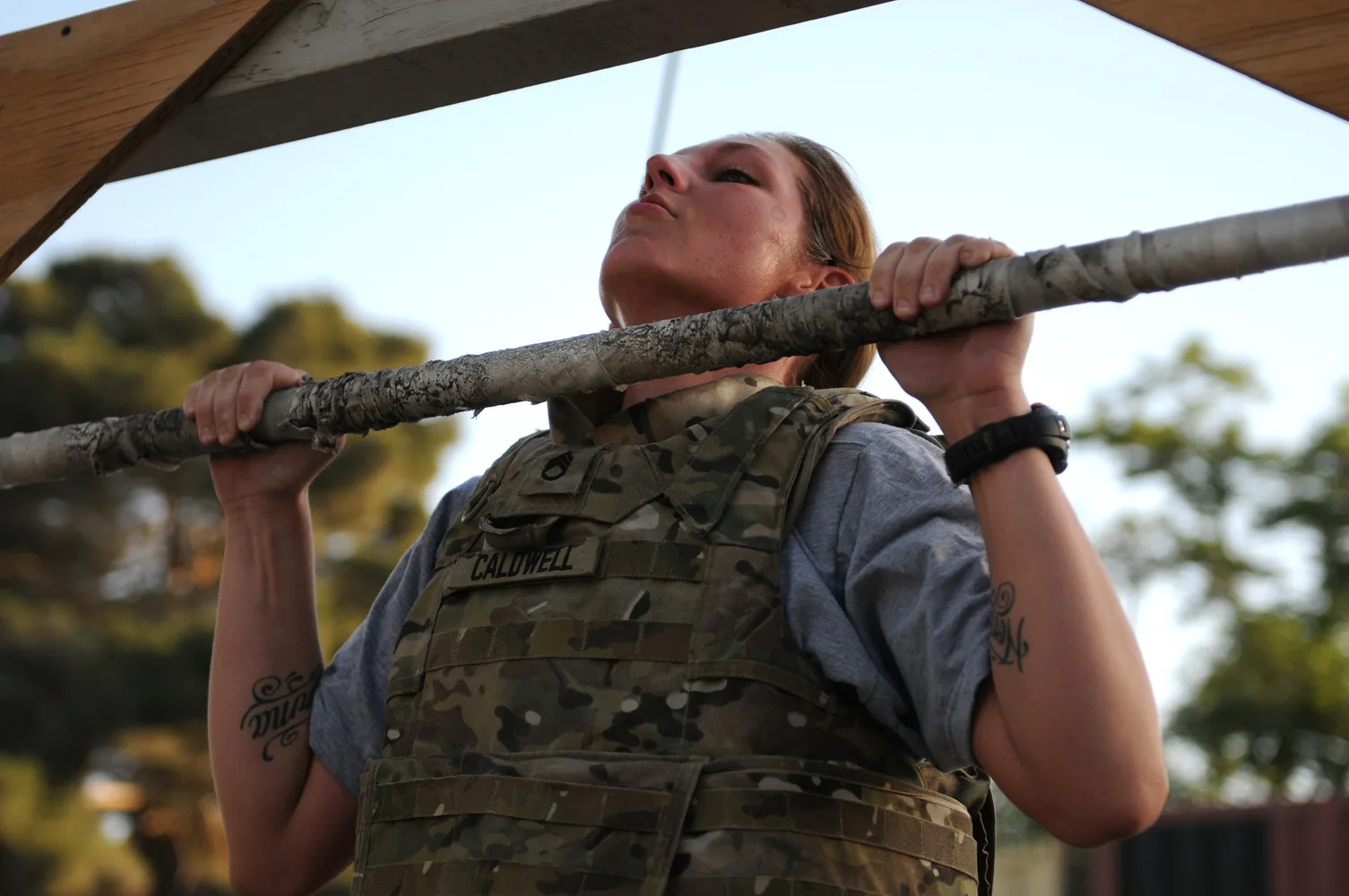
Streetlifting federations need rules that make belt-loaded pull-ups and dips comparable across meets. Source: Wikimedia Commons.

Streetlifting looks simple until someone has to judge it.
A weighted pull-up is not just a pull-up with a plate hanging from the belt. A competition dip is not just a deep gym rep. The difference between a record and a missed attempt can depend on grip, lockout, body position, commands, additional weight placement, age category, bodyweight class, whether the event used doping control, and which federation's rulebook the meet followed.
That is where the International Streetlifting Federation matters.
The ISF is one of the main attempts to turn streetlifting from a gym challenge into a regulated strength sport. Its public rule system covers weighted pull-ups or chin-ups, weighted dips, Multilift repetition formats, weight classes, referee duties, equipment requirements, records, standards, team scoring, athlete certification, and anti-doping formats. That makes it different from a social-media challenge and different from a local calisthenics contest where the organizer decides the rules on the day.
This article explains what the ISF is, how its rulebook works, what Classic and Multilift mean, how ISF standards differ from ordinary gym strength goals, why the anti-doping language needs to be read carefully, and what an athlete is choosing when they compete under ISF rules.
For the sport-level context, start with Streetlifting. For the closest barbell comparison, see Powerlifting, Powerlifting History, and the IPF federation guide.
The ISF in one sentence
The International Streetlifting Federation is a streetlifting federation built around standardized rules for weighted pull-ups or chin-ups, weighted dips, records, rankings, standards, and both maximum-weight and repetition-based competition formats.
The short version:
- Sport focus: weighted pull-ups or chin-ups and weighted dips, with additional weight attached to the athlete's belt.
- Main formats: Classic streetlifting for maximum additional weight, and Multilift for maximum repetitions with fixed external loads.
- Rulebook history: the published ISF technical rules trace version 1.0 to January 20, 2017; later versions followed in 2019, 2020, 2023, and the ISF-Russia rules page currently lists v5.1 dated August 1, 2025.
- Standards: ISF-Russia publishes standards for Classic streetlifting, single-event pull-up and dip, Multilift totals, Multilift pull-ups, Multilift dips, and strength calisthenics events.
- Records: ISF record pages separate Classic records, Multilift totals, Multilift pull-ups, and Multilift dips.
- Anti-doping structure: ISF material describes competitions with doping control and without doping control as separate result formats.
- Governance style: ISF presents itself as a standards-and-committee federation: rules, referee certification, medical/adaptive/ethics committees, records, and national representation.
That combination makes the ISF less like an entertainment brand and more like a rule system. Its value is not only that it hosts competitions. Its value is that it gives the sport a shared language for what a competition pull-up, dip, total, record, and standard are supposed to mean.
Why streetlifting needed a federation
Streetlifting grew out of a very practical idea: take the most familiar upper-body calisthenics movements, add measurable external load, and judge them like strength lifts. A pull-up plus 60 kg is easier to compare than a freestyle street workout routine. A dip plus 100 kg is easier to rank than a set of push-ups with different tempos and depths.
But measurability creates its own problems.
In a gym, a lifter can use whatever rep standard the training group accepts. One athlete may start a pull-up from a relaxed hang; another may keep the elbows slightly bent. One athlete may touch the bar with the chin; another may require the chin to clearly pass over the bar. One dip may be counted when the shoulder is below the elbow; another may be counted if the elbows simply bend enough to look convincing from the front.
Those differences are manageable in training. They are not manageable for records.
A federation rulebook solves three problems:
- Movement definition. It says what the athlete must do for the lift to count.
- Competition structure. It says how attempts, weigh-in, scoring, categories, equipment, and referee decisions work.
- Result portability. It makes a result from one city comparable to a result from another city, at least inside the same federation.
This is the same institutional problem that powerlifting faced earlier. A squat, bench press, and deadlift total became meaningful only when lifters agreed on depth, pauses, lockout, commands, weight classes, attempts, and judging. Streetlifting is younger, but the same issue appears immediately: without rules, the sport becomes a collection of impressive videos rather than a coherent competition system.
What the ISF rulebook actually regulates
The ISF rules page states that the rules establish common requirements for competition organization, judging, participants, disciplines, and results in countries and regions working under ISF. It also says the current Russian rules page lists version v5.1 dated August 1, 2025.
The page summarizes the purpose of the rules in five practical areas:
- equal conditions for competitors;
- unified judging and result recognition;
- transparent records and standards;
- athlete safety;
- development of streetlifting and strength calisthenics disciplines.
That matters because streetlifting has more moving parts than it appears to have. The rulebook does not only tell athletes to pull high or dip deep. It has to define disciplines, age groups, bodyweight classes, equipment, order of competition, secretariat work, refereeing, appeals, records, standards, and disciplinary consequences.
In practice, ISF rules turn the sport into a familiar strength-sport workflow:
- The athlete weighs in.
- The athlete competes in a defined category.
- Attempts or repetition sets are judged by referees.
- Only approved attempts count.
- Winners are decided by the rules of the event.
- Records and standards are recognized only when the competition conditions satisfy the federation's requirements.
That sounds basic, but it is the foundation of the sport. Without it, a 100 kg weighted dip can mean several different things: a training rep, a meet rep, a shallow rep, a deep rep, a locked-out rep, a touch-and-go rep, a record attempt, or a social-media claim. Under a federation rulebook, the result should mean one thing.
Classic streetlifting: maximum weight
Classic streetlifting is the most intuitive ISF format. The athlete tries to lift the heaviest additional weight possible in weighted pull-ups or chin-ups and weighted dips.
The older public English technical rules describe streetlifting as two exercises performed in sequence:
- weighted pull-up or chin-up;
- weighted dip.
Both are performed with additional weight attached to the athlete's belt. In Classic, the best successful result in each exercise counts, and the total is the sum of the best pull-up or chin-up and the best dip.
This is why Classic streetlifting is easy for powerlifters to understand. It behaves like a two-lift total:
- Powerlifting total = best squat + best bench press + best deadlift.
- ISF Classic total = best weighted pull-up or chin-up + best weighted dip.
The analogy is useful, but it has limits. Streetlifting does not use a barbell as the primary implement. Body position, grip, arm length, shoulder mobility, elbow tolerance, and the mechanics of hanging weight can affect the lift in ways that do not map neatly onto barbell strength. A strong bench presser may not automatically be an elite dipper. A strong lat pulldown does not guarantee a competition pull-up. Specificity matters.
The decision heuristic is simple: if the goal is maximum strength in streetlifting, Classic is the format to care about first. It is the closest thing the sport has to a powerlifting-style total.
Multilift: repetitions under load
Multilift is the other important ISF lane. Instead of chasing the heaviest possible additional weight for one repetition, the athlete performs maximum repetitions with a defined external load.
ISF record material lists Multilift totals and separate Multilift pull-up and dip records across fixed load combinations. ISF-Russia standards pages also list Multilift categories such as 8/12, 8/16, 16/24, 24/32, and 32/48. These labels refer to fixed additional loads used for repetition-based events, with separate variants for sex and competitive category.
This format changes the sport.
Classic rewards peak force. Multilift rewards a mixture of strength, local muscular endurance, pacing, pain tolerance, grip endurance, and technical economy. A lifter who can do one enormous weighted dip may not win a repetition set. A lighter athlete with excellent rhythm and endurance can be dangerous in Multilift even if they are not the strongest one-rep lifter.
That gives ISF streetlifting two different identities:
- Classic: maximum weight, record-like, close to powerlifting logic.
- Multilift: repeated strength under a fixed load, closer to strength endurance.
The distinction matters when comparing athletes. A Classic total and a Multilift result are not two versions of the same achievement. They answer different questions. Classic asks, "How heavy can you go once?" Multilift asks, "How much repeatable strength can you express under a fixed load?"
Pull-up, chin-up, and dip standards
The ISF technical language treats the pull-up and chin-up as related competition options. Older English rules state that references to "pull-up" may cover both pull-ups and chin-ups, depending on the rule context. This is important because a pronated pull-up and a supinated chin-up are not mechanically identical.
For athletes, the practical point is not to assume that gym vocabulary is enough. Before entering an event, you need to know:
- whether pull-ups, chin-ups, or both are allowed;
- what grip types are permitted;
- whether grip changes are allowed during the attempt;
- what starting position is required;
- what top position is required;
- what counts as downward movement or failed completion;
- how the added weight must be attached;
- whether the athlete can use wrist wraps or other personal equipment;
- whether the event is Classic or Multilift.
The dip has its own judging traps. A competition dip needs a defined bottom position and a defined finish. Strong athletes often lose attempts not because they lack strength, but because their training standard does not match the meet standard. The usual failure modes are predictable: incomplete elbow lockout, borderline depth, instability at the top, excessive swing, or misunderstanding the referee's commands.
This is where a federation rulebook earns its keep. It does not remove every judging dispute, but it gives athletes a target. Train to the target, not to the most generous rep your training partners will count.
Standards and classifications
ISF-Russia publishes ISF standards for several streetlifting and strength calisthenics events. The standards page lists Classic streetlifting total, single-event pull-up, single-event dip, Multilift totals, Multilift pull-ups, Multilift dips, and strength calisthenics formats.
For this website, that connection is important. Sports Category is built around classification standards: concrete numbers that let athletes compare their current level with a structured rank system. Streetlifting fits that mission well because the sport is unusually standard-friendly. It has clear events, measurable additional loads, bodyweight categories, and a strong culture of rank targets.
But standards should be read correctly.
A standard is not the same as a world record. It is not a promise that every federation will recognize the same number. It is not a training program. It is a benchmark under a specific rule environment.
Good use of standards:
- choose a realistic next rank target;
- compare your pull-up and dip balance;
- identify whether your total is limited by one event;
- plan bodyweight-class decisions;
- decide whether Classic or Multilift better matches your strengths.
Bad use of standards:
- comparing gym reps to meet standards without matching technique;
- assuming a rank in one federation transfers automatically to another;
- cutting bodyweight aggressively just to chase a lighter class;
- treating a single-event number as proof of full streetlifting ability;
- ignoring whether the result was set with or without doping control.
The best mental model is a map. Standards tell you where you are and what the next visible landmark is. They do not tell you the whole route.
Anti-doping: read the categories carefully
ISF anti-doping material is more complicated than a simple "tested federation" label.
The ISF-Russia anti-doping page describes two competition formats: With Doping Control and Without Doping Control. It says doping control must be stated in the competition regulations when it applies, and that results, records, and titles are tracked separately. It also describes separate records with doping control and without doping control, a disqualified-person register, and annulled results or records where violations are established.
This is an important distinction.
Some strength federations use "drug tested" as a broad identity. ISF material instead points to a split-record model: competitions may be held with doping control or without it, and the result status should follow that format. That can be sensible for a young sport because it allows participation across different organizer capacities while still protecting the meaning of tested records.
It also creates a responsibility for readers. Do not read every ISF result as equally tested. Ask the specific question:
Was this meet conducted with doping control, and is the result listed in the doping-control record path?
That is the only way to compare results honestly. A Classic total from a meet with doping control and a Classic total from a meet without doping control may use the same movement standards, but they do not live in the same regulatory context.
Records and the problem of comparability
ISF's record structure reflects the sport's complexity. The ISF records page separates Classic total, weighted pull-up, weighted dip, Multilift totals, Multilift pull-ups, and Multilift dips.
That separation is necessary. A "streetlifting record" without context is too vague.
A useful result label should include:
- Sex.
- Bodyweight category.
- Age category.
- Discipline: Classic, Multilift, single pull-up, single dip, or another recognized event.
- Additional load or load combination for Multilift.
- Meet and date.
- Whether the result was with doping control or without doping control.
- Rule version or federation context, when comparing across eras.
This may feel excessive, but it prevents bad comparisons. A 70 kg weighted pull-up by a lightweight athlete is not the same claim as a 70 kg weighted pull-up by a heavyweight. A Multilift 24/32 result cannot be compared directly with a Classic max-weight result. A record with doping control should not be casually merged with a record without doping control.
The more a sport grows, the more labels matter. Labels are not bureaucracy for its own sake. They are what keep numbers meaningful.
Governance and committees
ISF presents itself with the familiar machinery of a governing body: congresses, committees, national representation, referee structures, records, standards, and documents.
The 5th ISF General Congress material is useful because it shows the federation's institutional priorities. The agenda included reporting on 2022 results, constitutional reform, possible official registration in Brussels, election procedures for president and federation officials, membership fees, an ethics code, an ethics and disciplinary committee, and adding weighted muscle-up as a possible new discipline.
The ISF committees page lists a referee committee, adaptive committee, medical committee, and ethics committee. It describes the referee committee as responsible for reviewing and interpreting competition rules, preparing and certifying referees, and approving referee lists for international competitions. It describes the medical committee as responsible for health and safety conditions and anti-doping policy activity.
This is the unglamorous side of federation building. Athletes see the platform, the belt, the chain, and the final number. A sport also needs rule interpretation, appeals, medical constraints, adaptive categories, referee education, and document control.
The gap to watch is execution. A committee structure is useful only if it is active, transparent, and trusted. For a young federation, public documents are a start, but the long-term credibility test is whether athletes can consistently find current rules, event calendars, records, disciplinary outcomes, and clear explanations of changes.
ISF and WSF: two different streetlifting stories
Streetlifting is not governed by one universally dominant federation. ISF and WSF represent different public stories about how the sport should grow.
ISF is the standards-and-rulebook story. Its strongest claim is structure: rules, records, standards, categories, committees, and national representation. The tone is institutional.
WSF is usually discussed as the professionalization-and-visibility story, associated with higher production values, athlete attention, and the attempt to make streetlifting feel like a modern spectator strength sport.
That comparison should not be reduced to "one is real and the other is fake." Young sports often need both pressures:
- rule systems that make results comparable;
- promoters who make competitions visible;
- standards that help ordinary athletes progress;
- media presentation that makes elite results interesting to watch;
- enough institutional discipline that records survive beyond social-media cycles.
For athletes, the practical choice is not ideological. It is operational:
- Which federation has events near you?
- Which rulebook matches the event you are preparing for?
- Which records or standards do you care about?
- Is the meet with doping control or without doping control?
- Are the judges certified and consistent?
- Does the event publish protocols clearly?
- Will your result be recognized where you want it recognized?
That is the level at which federation choice becomes useful.
What choosing ISF means for an athlete
Choose an ISF-style event if you value:
- formal movement standards for weighted pull-ups and dips;
- rank and standard targets;
- Classic and Multilift pathways;
- a competition format that connects calisthenics and strength sport;
- records separated by discipline;
- a rulebook rather than ad hoc organizer judgment;
- the possibility of competing in either maximum-weight or repetition-based formats.
The trade-offs are real:
- streetlifting federations are younger and less globally settled than powerlifting federations;
- public documents can be fragmented across ISF, ISF-Russia, regional sites, PDFs, and older rule versions;
- anti-doping status must be checked per competition format;
- standards may not transfer cleanly between federations;
- judging can still vary if referee education is inconsistent;
- a strong gym pull-up or dip may not survive strict competition commands.
The last point is the one athletes feel first. In training, you can build strength with many variations. In competition, the variation does not matter. The rulebook does.
How to prepare for an ISF-style meet
A practical preparation sequence looks like this:
- Read the current rules for your event. Do not rely on a highlight reel or a friend's memory of last year's meet.
- Decide whether you are training Classic or Multilift. The physiology and pacing are different.
- Film your competition reps from judge-relevant angles. You need to see the start position, top position, lockout, depth, and swing.
- Train commands and pauses. A rep that is strong but rushed can still fail.
- Practice with the same belt and loading setup. Hanging weight changes balance and can make a familiar movement feel unfamiliar.
- Check the meet's doping-control status. This affects how the result should be interpreted.
- Use standards as targets, not as identity. A rank is useful feedback, not a substitute for training judgment.
The biggest mistake is preparing for the gym version of the lift while entering the competition version. That fails in every judged strength sport. Streetlifting is no exception.
Where the ISF fits in strength sports
The ISF occupies an important place because streetlifting sits between worlds.
It borrows the simplicity of calisthenics: pull yourself up, press yourself out of the dip bars. It borrows the measurement culture of strength sport: weight classes, records, totals, standards, attempts, referees. It borrows some institutional patterns from powerlifting: rulebooks, national representation, anti-doping language, and a distinction between meet lifts and gym lifts.
That mix is why the sport is attractive and difficult. It is accessible enough that a strong gym athlete can understand it immediately, but technical enough that fair competition needs real rules.
The ISF's role is to make the numbers mean something. Not every streetlifting achievement has to happen under ISF rules. Not every athlete needs a federation. But once athletes start comparing records, awarding ranks, and selecting champions, the question changes from "Who looks strongest?" to "What exactly was judged?"
That is the federation question. The ISF is one answer.
Where to go next
- For the full sport overview, read Streetlifting.
- For the other major streetlifting federation article, read WSF.
- For the closest three-lift strength-sport comparison, read Powerlifting.
- For how federation systems mature over time, read Powerlifting History.
- For a stricter international federation model, read IPF.